- Jul 25
The Wild West of AI is Ending: What the Florida DOE's New AI Mandate Means for Your Classroom
- Charles Watson
- 0 comments
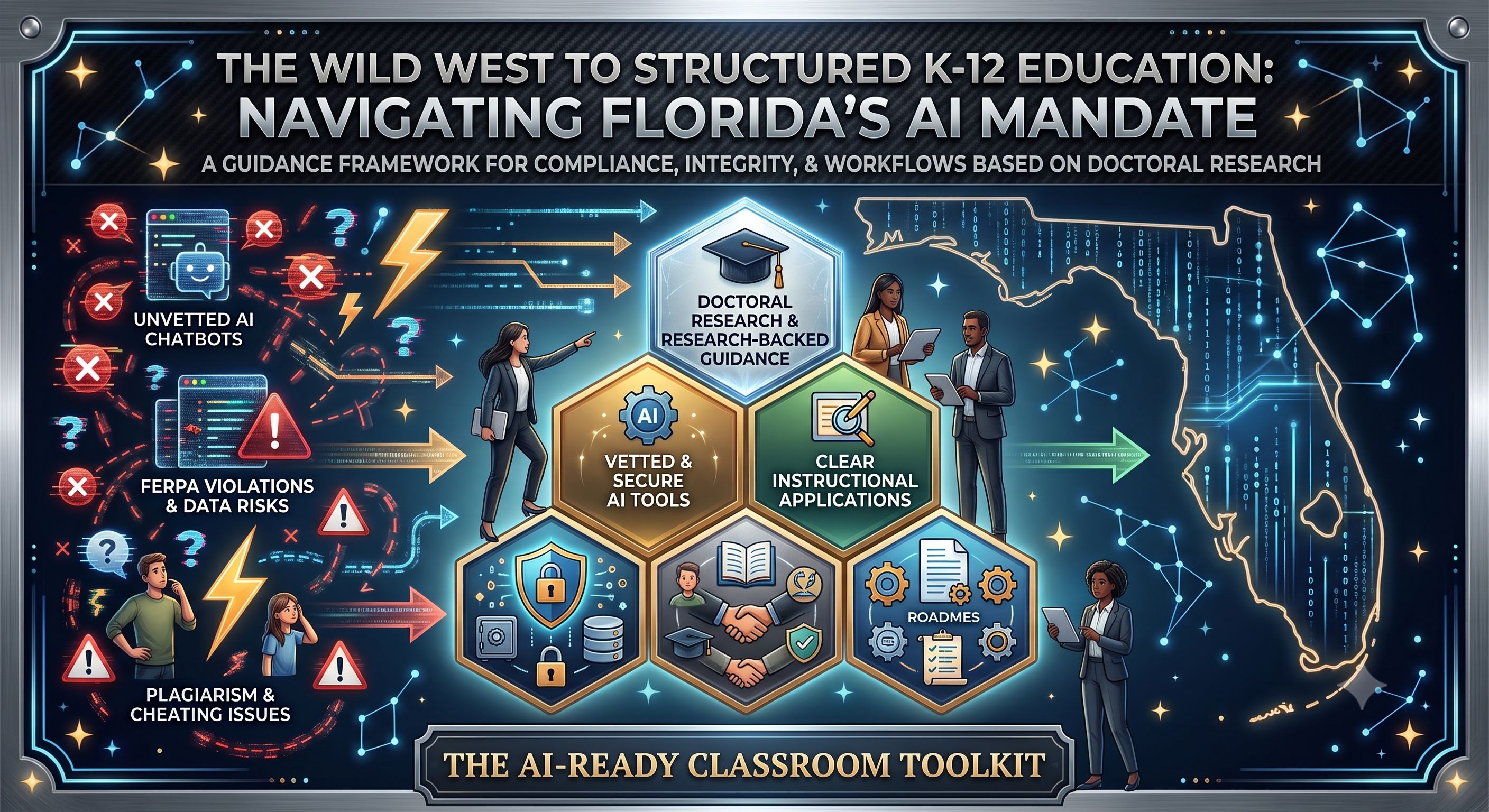
by Dr. Charles Watson, Ph.D.
The News: This week, the Florida Department of Education signaled a massive shift in how schools handle artificial intelligence. According to a new directive, the DOE is poised to require all school districts to officially incorporate rules regarding AI into their internet safety guidelines.
With a workshop set for August 5th to discuss the proposed rule changes, the message from the state is clear: the days of using unvetted AI tools in K-12 classrooms without strict district oversight are coming to a close.
The "Why" Behind the Mandate: Why the sudden urgency? It all comes down to student data. The DOE cited strict adherence to the Family Educational Rights and Privacy Act (FERPA) and the protection of private student information as the driving force behind this mandate.
Florida law already prohibits K-12 websites and operators from unknowingly collecting or sharing student data—which includes everything from text messages and search activity to biometric data and voice recordings.
The problem? Many free AI chatbots and tools do collect this data. When a teacher innocently copies and pastes a student's essay into an unvetted AI grader, they might be unknowingly feeding sensitive educational records into a third-party server, violating FERPA compliance.
The AI-Ready Take: Why This is a Good Thing for Teachers At first glance, a state mandate might sound like more red tape for educators. But at The AI-Ready Classroom, we see this as a massive win for teachers.
For the past year, teachers have been left in the dark, forced to guess which tools are safe, which prompts are secure, and how to navigate AI plagiarism on their own. This lack of standardization is a primary driver of teacher burnout.
This mandate forces districts to finally step up and provide clear, uniform frameworks. It shifts the burden of compliance off the individual teacher's shoulders and onto the district infrastructure.
What You Can Do Today: While districts scramble to finalize their policies ahead of the 2026-2027 school year, here is how you can protect yourself and your students right now:
Anonymize Everything: Never input a student’s real name, ID number, or specific demographic information into any AI prompt. Use placeholders like "Student A."
Stick to Walled Gardens: If your district has an enterprise license for an AI tool, use it. These enterprise versions usually have data-sharing turned off by default, unlike public versions of ChatGPT.
Advocate for Standardized Frameworks: If your school administration is unsure how to meet these new DOE guidelines, they don't have to start from scratch.
Ready to help your school get compliant? Forward our For Schools page to your administration. Our 2026 K-12 Doctoral Research already includes fully developed, FERPA-compliant policy frameworks, Student AI Ethics rubrics, and district-wide training modules designed specifically to meet state safety guidelines without slowing teachers down.
About the Author: Dr. Charles Watson, Ph.D. is the founder of The AI-Ready Classroom. His 2026 doctoral research focuses on K-12 AI integration across Florida public school districts, developing frameworks that allow educators to navigate the technological shift safely while protecting student data privacy.